


Table of Contents
A successful internal communication strategy is a structured plan an organization uses to deliver consistent, targeted, and measurable messages to its internal audiences. The eight components are: a challenge audit, audience mapping, clear goals and KPIs, a workforce communications platform, a single source of truth, engaging content, frontline reach, and outcome measurement. Together they turn communication into a measurable driver of retention, customer satisfaction, and business goals.
In an earlier post, we explored a successful multi-dimensional communications strategy. Since then, we have not only learned from our customers' success but also from IT, HR, and internal communication professionals about how technology trends and digital initiatives are impacting communications strategy at organizations.
A good communication strategy can increase employee morale, engagement, and alignment with an organization's vision and mission. The strongest strategic communications cover both internal communication (employees, managers, frontline teams) and external communication (customer communication with audiences outside the organization, business communication with partners, public relations, marketing campaigns, press releases, and email marketing), with consistent key messages, a shared brand voice, and joined-up measurement across internal and external audiences. Strategic communications that align internal and external messaging also help an organization build strong relationships with external stakeholders and drive behavior change at scale.
The stakes have also shifted. Firstup's 2026 survey of 3,093 corporate office workers, managers, and hourly employees found that 89% of managers, 82% of corporate office workers, and 75% of hourly employees in the US describe themselves as engaged, while 40% to 46% across roles plan to leave within 12 months. The gap shows up most clearly in how organizations communicate.
Here is our updated list of the eight key components of a successful communication strategy.
Key Insights
- Engagement is high but unstable. Most employees say they are engaged, yet four in ten plan to leave within the year, putting pressure on every communication strategy to deliver clearer messages.
- Effectiveness, not volume, is the gap. Most employees hear from their employer weekly, yet two-thirds still miss critical updates, a clear sign that the communication strategy needs work.
- Search costs real time. Forty-three percent of corporate office workers spend three or more hours a week hunting for basic information.
- Frontline employees experience communication differently. Strong communication drives engagement for over half of managers and corporate workers, but only a third of hourly employees, exposing a structural gap in many strategic communications programs.
- Communication breakdowns drive attrition. Twenty-three percent of employees say miscommunication makes them want to look for a new job.
1. Understand your communication challenges
As a first step, identify what communication challenges your team and organization face. For global organizations, reaching all employees can be a primary challenge. For others, employees may be constantly bombarded with messages and important company information is not getting seen. Many organizations carry both problems at once.
Firstup's 2026 State of Employee Engagement in North America report shows where the friction sits. Nearly 7 out of 10 employees across roles report missing an important policy or procedural update, and half of managers and hourly staff say their employer does not have an effective way of sharing information with them. These are clear signs that the communication strategy is not landing key messages with the right audience.
Before redesigning anything, audit your communication plan against three questions: which audience segments are missing critical updates, which communication channels can you measure, and how much time do employees spend hunting for information. These three answers are the foundation of a strong communication strategy.
The broader picture matches. Gallup's State of the Global Workplace report found that only 20% of employees worldwide were engaged in 2025, costing the world economy an estimated $10 trillion in lost productivity. Communication is one of the levers organizations can actually move.
2. Examine your employee audience
Consider the different audiences and groups of employees you need to reach and what tools you have available to reach them. Keep in mind that each employee has a preferred method of consuming news and information, and not all employees may have access to a computer or even company email. If you have a large group of employees who do not have a company email address, your employee communication plan should include alternative channels, such as a mobile app, SMS, and digital signage, so the communication strategy can reach every audience segment.
Also, take a page from a marketing campaign and study your employees and their journey, much like you would a customer. Use our template to form employee personas, so you can target and personalize messages that are relevant and timely to each audience segment. This step will greatly improve the employee experience from day one and helps an effective communication strategy land.
Personalize beyond the persona
A persona is the start, not the finish. The most effective internal communications teams segment their target audience by role, location, shift, language, and behavioral signals. Firstup's 2026 data shows the cost of skipping this step: strong communication drives engagement for 52% of managers and 49% of corporate office workers, but only 35% of hourly employees, largely because corporate-style content rarely lands with frontline audiences.
3. Set goals and KPIs
Setting goals for your internal communications strategy is important for measuring the success of your program. By establishing clear goals that tie to larger business objectives at the beginning of your process, you will be able to directly see how your communication plan plays out. Consider the different types of audiences you are engaging with, as each group of employees may need different goals. For example, you may have different goals for your sales team compared to the employees who are in your retail stores. Remember to adjust your strategy based on what you learn, but keep an eye on the big picture and on company goals.
The most useful KPIs connect communication efforts to business goals:
- Retention risk: Voluntary employee turnover by role and location, cross-referenced with communication reach data.
- Compliance: Sign-off rates on policy updates, cross-referenced with miscommunication incidents. Twelve percent of managers and hourly employees say miscommunication has impacted their safety.
- Productivity drag: Average hours per week employees spend searching for information they need to do their jobs.
4. Choose a workforce communications platform
Once you have established goals, consider what methods of communication you will use to get your message across. Keep in mind the different types of employees you are reaching and think of what channels will be best for each group.
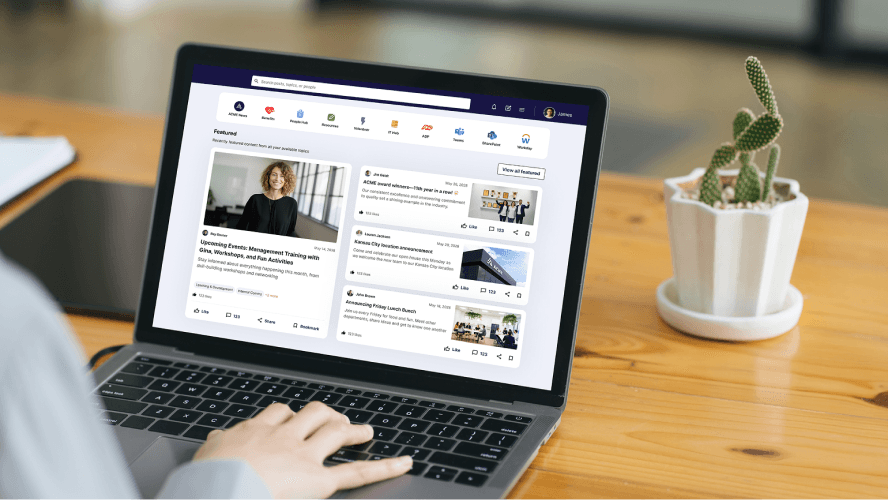
A multichannel or omnichannel approach is ideal for reaching different employee segments, from knowledge workers at headquarters and distributed workers across the globe to frontline teams. This method reaches employees on their preferred channels, and the best way to do this is with a workforce communications platform that integrates all your channels into one place to plan, create, publish, and measure your comms. The same platform can support business communication with partners and external communication strategy as the strategic communications team scales.
Hyper-personalized comms for every employee
“We can send certain communications just to pilots, or in-flight tech ops, or airports, and also target by city or region—slice and dice the content so it’s appropriate for the team member.”
A strong platform should give the communications team a few essentials:
- Intelligent targeting by role, location, shift, and behavior, so the right message reaches the right audience.
- Native omnichannel delivery across email, mobile app, intranet, MS Teams, and digital signage from one system of record.
- Engagement analytics that tie campaign performance back to business outcomes, not just opens and clicks.
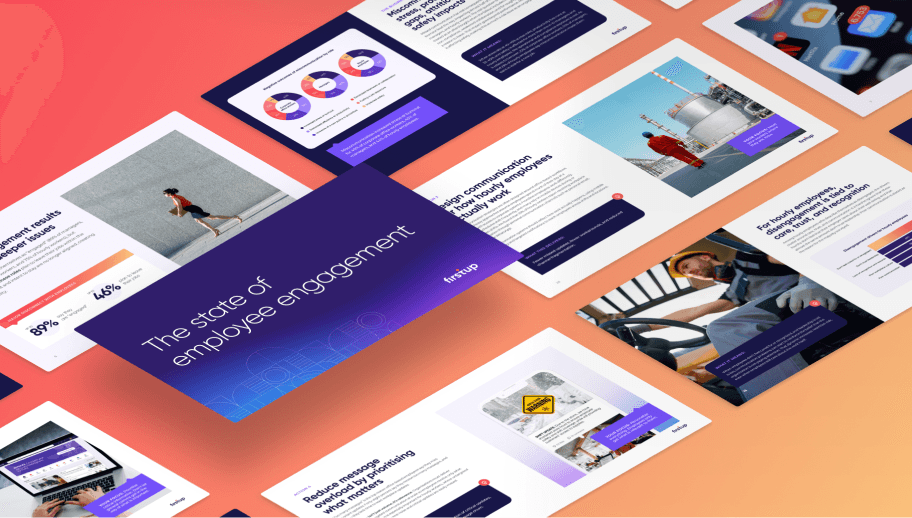
See the data behind these findings
Firstup surveyed 3,093 corporate office workers, managers, and hourly employees across North America.
5. A single source of truth for communications
It is best practice to use your workforce communications platform as the source of all company news and information. Then, you can feed into other channels such as email, mobile app, digital signage, and company intranets. For example, your internal communications team may direct employees to their mobile communication platform as the source for all the information they need to know.
The business case is concrete. According to Gallagher's 2026 Employee Communications Report, 83% of internal communications professionals say information overload is a growing problem, and high-volume messaging raises leader trust risk by 30% and burnout risk by 24%. A single source of truth is how organizations protect employee attention without sacrificing reach.
6. Create engaging content
Once you have established your challenges and what communication channels will be used, focus next on creating compelling content. Good content is short and varied. Content can come from a variety of sources such as videos, photos, podcasts, blog posts, stats and data, the intranet, and more.
A good content strategy involves pulling content internally, from outside sources, and from your own employees. Our customers have noticed that the most engaging content is either employee-submitted or about another employee. People love to celebrate the successes of their peers. It is important to be open to employee feedback through feedback forms and survey responses in order to continually improve your strategy. Remember to also optimize your content for viewing on mobile devices.
Match content to the channel
- Email and internal emails remain the most reliable broadcast channel for broad updates across knowledge-worker populations.
- Mobile push and SMS carry time-sensitive frontline updates, shift-change notes, and urgent safety information.
- Intranet and search-driven hubs house evergreen content such as benefits, policies, and leadership communication.
- Digital signage reinforces high-priority messages in shared physical spaces.
- Internal social platforms and group chats support peer-to-peer recognition and informal collaboration.
7. Reach frontline workers on the channels they use
Mobile communication platforms have quickly become the preferred method of communication for employees, simply because they are already using mobile to communicate in their personal lives. A mobile-first approach also closes the email gap for the large share of retail, manufacturing, hospitality, healthcare, and logistics workforces without a company inbox.
Firstup's 2026 State of Employee Engagement report shows the gap clearly: strong communication drives engagement for only 35% of hourly employees compared with 52% of managers and 49% of corporate office workers. Among disengaged hourly employees, 75% say they do not feel their employer cares about their well-being. A strategy that ignores frontline reach is not really a strategy.
8. Measure outcomes, not just outputs
Metrics are an important component of measuring the success of your internal communication strategy, but not all metrics are created equal. Open rates and page views tell you who received a message; they do not tell you whether the message worked. Treat measurement as a three-layer model: reach (who received the message), comprehension (did employees understand it), and behavior change (did the intended outcome happen, such as policy sign-off or training completion).
Find the metrics that are most aligned with your established goals and KPIs and listen to the data. Often, communicators have hunches or assumptions of what kind of communications employees want to hear, but only the data will prove that. Tie communication efforts to retention rates, productivity, and employee engagement so business leaders see how the strategy drives measurable business outcomes.
Benchmark your communication strategy
Compare your program against engagement and reach data from across the workforce.
Conclusion
These eight steps will help an organization build a solid foundation for an effective communication strategy. Once you understand your communication challenges, you can set goals that will help you create engaging content, communicate with employees on every channel, and measure what really works. Each step turns how an organization communicates with internal and external audiences into a strategic capability tied to retention, productivity, and customer satisfaction.
To learn more about how Firstup is helping organizations improve their internal communication strategies, request a demo of our platform today.
FAQ
Deliver a hyper-personalized employee experience at scale
Table of Contents
Related posts
Subscribe via Email
Subscribe to our blog to get insights sent directly to your inbox.
Related posts


Sign up to receive the latest news and resources from Firstup
Firstup delivers personalized communication and data insights to improve the employee experience at every moment that matters