


Table of Contents
A digital workplace is the connected set of technologies employees use to do their jobs, including communication and collaboration tools, HR and business systems, the intranet, and AI tools and agents, all accessible from any location or device. It is the virtual equivalent of the physical office, built to help people stay informed, aligned, and productive wherever they work.
Your digital workplace is getting more attention lately, and not just from IT. It’s in budget meetings, leadership conversations, and probably somewhere on your own to-do list.
Demand for digital workplace software keeps climbing, but the priority has changed. It’s less about buying more tools and more about connecting the ones you have, putting AI to work, and reaching employees wherever they are. Expectations from employees are rising just as fast.
The digital workplace is no longer only an IT or HR initiative. It touches every part of an organization, from frontline teams to executive leadership, and the tools you choose have a direct impact on how people connect and get work done.
What follows is a practical look at what a strong digital workplace looks like in 2027 and beyond, why it matters to the business, and how to build one without overwhelming your teams.
Key insights
- The digital workplace is now a strategic priority that affects every team, not just IT or HR.
- A true digital workplace connects systems to support real workflows, not just a collection of apps.
- Orchestrated, integrated platforms reduce silos and beat piling on more tools.
- The strongest strategies are designed around how people actually work, especially frontline and deskless teams.
- A clear, measurable roadmap with defined goals and owners is what makes transformation stick.
- Security and governance have to scale as the digital workplace and its AI tools expand.
What is a digital workplace, really?
Let’s be honest: “digital workplace” is one of those terms that gets thrown around a lot without much clarity. But at its core, it’s simple. Your digital workplace is the virtual version of your physical office space; it’s where work actually happens.
The digital workplace is the “virtual, digital equivalent of the physical workplace.” — Paul Miller
That includes all the digital workplace software and tools your employees use to do their jobs: messaging apps, project management software, HR systems, virtual meeting tools, enterprise social media tools, internal communication platforms, even the intranet. Whether your team is sitting at a desk, checking a mobile device on a shop floor, or flying between cities, these tools make up your digital work environment.
And it’s not just for corporate offices. The digital workplace is just as essential for hybrid workers, remote teams, and frontline employees. It’s what keeps people connected across locations, roles, and devices and makes sure no one’s left out of the loop.
But here’s the catch: just having tools doesn’t mean you have a strategy. Over time, many organizations end up with a patchwork of disconnected platforms that don’t really talk to each other. And that makes it harder for people to stay informed, aligned, and productive.
That gap shows up most in the tool organizations lean on hardest. In Gallagher’s global State of the Sector survey, intranets rank among the most-used employee-communication channels and among the least effective. A destination employees have to visit isn’t the same as reaching them.

A true digital workplace model isn’t just a collection of apps. It’s a thoughtfully connected system that enables employees to work better, wherever they are, on whatever device they’re using.
A well-designed digital workplace enables smoother workflows by aligning with actual business processes and employee needs, not just licenses and logins. Of course, not every organization is there yet. Some are still juggling too many disconnected tools, and that’s where strategy makes all the difference.
Why is the digital workplace so important?
By 2027, the question isn’t whether to invest in a digital workplace. Most organizations already run sprawling stacks of digital tools, and the real challenge is making them work together.
Because tools alone don’t make a digital workplace work. What matters now is how everything connects: your people, your business processes, AI, and the way your teams actually work. As agentic AI and automation move into daily workflows, that orchestration is what separates a modern digital workplace from a pile of logins.
How the digital workplace enables cross-team alignment
A strong digital workplace enables alignment across teams, tools, and communication. When things work well, it’s easier for employees to stay informed, get their work done, and feel connected, whether they’re in an office, on a job site, or working remotely.
So why is the digital workplace such a priority now?
1. Expectations are higher on both sides
Your employees want tools that feel intuitive, that work across devices, and that keep up with modern digital work environment demands. If the systems you’re using don’t match the way they live and work, you’ll feel the friction in productivity, in satisfaction, and in retention.
And without the right digital transformation strategy behind it, even the best tools can miss the mark.
2. Work is distributed, and that’s not changing
Work no longer happens in one place. Among remote-capable roles, hybrid is now the default: Gallup’s 2026 data shows roughly 52% of U.S. employees in those jobs work hybrid, 26% fully remote, and just 22% fully on-site. But remote-capable work is only part of the picture, and for most of the workforce the real divide was never remote versus office at all.
Roughly 80% of the global workforce works outside a traditional desk: on factory floors, hospital wards, sales floors, and job sites. That means your digital workplace has to reach everyone, not just the people with a corporate laptop and a full inbox, especially when 54% of deskless workers have only limited access to email.
If it doesn’t support seamless communication, knowledge sharing, and access to digital records on any device, from any location, it’s not keeping up.
Learn more: Understanding the hybrid workforce
3. Communication is fragmented, and people feel it
Most organizations use a mix of email, chat, intranet, apps, and internal newsletters to reach employees. That’s a lot to keep track of, and without a clear orchestration strategy, important messages fall through the cracks.
The stakes are higher than a missed memo. In Firstup’s Communications Crisis in Manufacturing survey of 1,000 U.S. factory workers, nearly 8 in 10 learned about policy, procedure, or safety changes only after those changes had already taken effect. Another 71% had experienced a production or safety issue as a result of miscommunication from a manager or leader.
That’s exactly why workforce orchestration matters. It’s about delivering the right message to the right people at the right time, whether you’re rolling out benefits info, launching a new initiative, or managing a crisis.
4. Engagement drives performance, and vice versa
This isn’t just about tools. It’s about outcomes.
Gallup’s research consistently shows business units with highly engaged employees outperform their peers with 23% greater profitability and 17% to 18% higher productivity. Yet according to Gallup’s 2026 State of the Global Workplace report, only 20% of employees worldwide are engaged at work, and low engagement costs the global economy the equivalent of roughly 9% of GDP.
Firstup’s 2026 State of Employee Engagement Report, a March 2026 survey of 3,093 U.S. and Canadian employees, found that 23% of employees say communication breakdowns make them want to look for a new job, rising among disengaged hourly workers, 75% of whom don’t feel their employer cares about their well-being.
When your digital workplace is set up to actually support employees, through thoughtful communication, personalization, and easy access to what matters, engagement goes up. And so does performance.
See what 6,200 employees really think about engagement and retention
Firstup’s 2026 State of Employee Engagement Report breaks down where communication is quietly driving people out the door, and what to do about it.
How do you know if your digital workplace is actually working?
You’ve invested in the tools. You’ve rolled out the strategy. But how do you know if it’s doing what you hoped?
An effective digital workplace isn’t measured by logins or app downloads. It’s about what those tools enable: smoother workflows, better communication, and a workforce that’s actually engaged.
Signs your digital workplace is on the right track
- Mundane tasks are disappearing. Repetitive work is automated or dramatically reduced as AI agents increasingly take on the multi-step tasks that once needed manual effort.
- Productivity is up. Employees are spending less time switching between tools and more time getting meaningful work done.
- People feel connected. Whether they’re remote, on-site, or hybrid workers, employees stay informed and aligned, and you can see it reflected in stronger employee engagement across the board.
- Knowledge sharing is easier. Employees can quickly find what they need, no matter the device or location.
- Employee satisfaction is improving. You’re seeing better retention, stronger feedback in employee surveys, and fewer gaps in communication.
- Recruiting gets easier. A modern, digital workplace helps attract top talent, especially when your tools support work-life balance and flexibility.
- Your tech actually talks to each other. Digital workplace platforms are integrated across systems, reducing silos and increasing efficiency.
- Security is built in. Your tools are keeping up with modern data security requirements, reducing the risk of employee data breaches worldwide.
If you’re not seeing those outcomes yet, it doesn’t mean your strategy is broken, but it may be time to reevaluate how all the digital workplace components are working together.
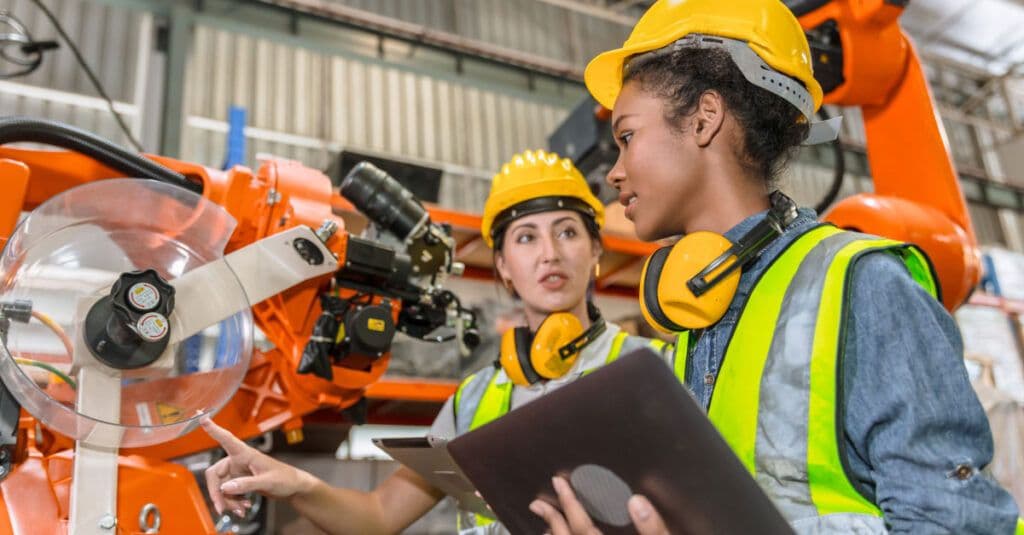
Spending on digital workplace solutions
Wondering whether your peers are also investing in their digital workplace? They absolutely are.
According to MarketsandMarkets, the global digital workplace market is projected to grow from $67.57 billion in 2025 to $161.82 billion by 2030, a 19.1% compound annual growth rate, fueled by demand for seamless digital workplace experiences, better employee communication, and stronger support for hybrid work.
That kind of growth isn’t about shiny tools or trend-chasing. It’s about solving real problems: scattered communication, fragmented tech stacks, employee resistance, and the challenge of replacing what used to happen organically in a physical office space.
According to Forrester’s 2025 report on digital workplace services, organizations are doubling down on their investment in digital workplace strategies. The goal isn’t just to modernize systems. It’s to improve the experience, bring AI into day-to-day operations, automate repetitive tasks, and reduce unnecessary costs.
It’s a clear sign that the digital workplace has shifted from a tech initiative to a business essential, and a path to long-term cost savings. The return can be substantial: a 2026 Forrester Total Economic Impact study of Firstup found a 398% ROI over three years, alongside a 30% reduction in serious safety incidents by year three as more consistent, targeted communications reached the right people at the right time.
That means organizations are rethinking how they implement digital workplace platforms, what digital workplace tools belong in their stack, and how to align them with real business processes. It’s not about spending more. It’s about spending smarter, because the right digital workplace enables better collaboration, stronger employee engagement, and efficiency.
The numbers behind a connected workforce
Forrester’s 2026 Total Economic Impact™ study found Firstup delivered a 398% ROI and $7.1M net present value over three years for a composite organization.
Hyper-personalized comms for every employee
“We can send certain communications just to pilots, or in-flight tech ops, or airports, and also target by city or region—slice and dice the content so it’s appropriate for the team member.”
Digital workplace best practices
Building an effective digital workplace isn’t just about rolling out new tools. It’s about designing a strategy that makes sense for how your people actually work and what your business needs to get done.
Here are five best practices to keep your rollout focused, employee-centered, and set up for long-term success.
Best practice #1: Start with what your employees actually need
A lot of digital workplace challenges come from designing around platforms instead of people. Before investing in new tools or reworking internal processes, get a clear understanding of what your workforce needs to succeed in their day-to-day operations, and encourage employee feedback early and often to guide those decisions.
Digital workplace success starts with people
To figure out what your workforce really needs, start by asking the right questions. You’re not just taking inventory; you’re trying to understand how people actually use (or avoid) your tech stack and where the friction is showing up.
Ask things like:
- Are employees spending more time managing tools than doing meaningful work?
- Are digital distractions making it harder to focus?
- Are our digital workplace tools siloed or disconnected?
- Do they support the way people actually work, or do they create roadblocks?
- Do we have the right mix of communication and collaboration tools to support different roles, departments, and regions?
Hybrid workers might need mobile-first tools. Frontline teams might need asynchronous communication options. And every employee wants fewer logins and more clarity.
When you treat digital transformation as a people-first initiative, and not just a technology rollout, you’re more likely to land on solutions that actually work.
Best practice #2: Align your vision
Getting feedback from employees is step one. Step two is making sure your strategy doesn’t stop in a silo.
Bring in the people who will make this work. That includes leaders from IT, HR, internal communications, and line-of-business teams. When everyone understands how the digital workplace supports both employee productivity and the business, you’ll spend less time defending the plan and more time making progress.
The business case for digital transformation
Your digital workplace isn’t just a set of tools; it’s a system that connects employee journeys across touchpoints: onboarding, training, benefits, change communications, and everything in between. That alignment is key to any meaningful digital transformation, where tools and processes actually support how employees work, rather than getting in the way.
Internal communication plays a critical role here. If you want to get buy-in, you need to explain the why behind the change, not just the what. That transparency builds trust, and trust leads to adoption.
Best practice #3: Audit your tech stack and be honest about what’s working
If your digital workplace feels cluttered, you’re not imagining it. Most organizations have too many disconnected systems that overlap, underperform, or make basic tasks harder than they should be.
That’s why one of the most important steps in any digital workplace rollout is auditing what you already have. Look at every platform, app, and tool through a clear lens: is this helping employees, or slowing them down?
The audit matters most where the stack is most fragmented. In manufacturing, more than a quarter of frontline workers still rely on paper notices or bulletin boards for workplace updates, a reminder of how disconnected the communication infrastructure can be even as the rest of the business automates.
- Are digital workplace tools creating efficiency or just more tabs to manage?
- Where are employees hitting friction, especially in communication and collaboration?
- Are we creating a seamless experience across departments and devices?
- What’s driving user productivity, and what’s creating noise?
- Are we doing enough to support secure digital workplace practices, especially around accessing confidential data?
Why less really is more
Your goal is to simplify, not stack. The right audit will help you identify where your digital workplace components are supporting employee satisfaction and internal communication, and where they’re working against it.
This isn’t just about cutting costs (though that’s part of it). It’s about creating a more intentional, focused work environment where digital tools support, not complicate, your employees’ day-to-day experience.
Learn more: 8 key components to a successful communication strategy
Best practice #4: Prioritize integration over piling on features
More tools doesn’t mean more progress. In fact, when systems aren’t integrated, every new app becomes just another place employees have to check, update, and troubleshoot. The result is lost time, missed messages, and a fragmented employee experience.
That’s why smart integration is non-negotiable. A seamless digital workplace experience depends on how well your systems work together: HR platforms, comms tools, collaboration apps, access control, and employee data, all of it.
When your digital workplace tools are orchestrated instead of siloed, they empower employees, reduce friction, facilitate communication, and support user productivity without the noise. It’s not about having the flashiest features. It’s about building a digital environment that actually works for your teams.
From disconnected tools to connected experiences
This is where many digital workplace strategies fail: they add tools instead of connecting the ones that already exist. But the organizations that get this right are the ones whose digital models deliver real cost savings, better alignment, and measurable improvements to employee engagement.
Best practice #5: Build a roadmap your teams can actually follow
You don’t need a hundred-page strategy deck. What you do need is a clear, realistic plan that helps your organization move forward without overwhelming everyone involved.
A roadmap built for real teams
A strong digital workplace rollout happens in stages. It sets expectations early, shows teams what’s coming next, and keeps things flexible enough to adjust as you learn. Without that structure, even the best tools can cause confusion and pushback.
Your digital workplace roadmap should answer a few key questions:
- What are we rolling out first, and why?
- Who’s responsible for each step?
- How are we keeping employees informed along the way?
- And what does success actually look like?
That last one matters. If you’re not measuring outcomes like employee engagement, productivity, or adoption, it’s hard to know if your strategy is really working, or just making noise.
Clear communication, regular checkpoints, and visible wins can make all the difference. It’s not just about launching new tools. It’s about helping people understand what’s changing and why it matters to their day-to-day experience.
Building a smarter digital workplace
When your roadmap is easy to follow and tied to real results, your teams are more likely to stay on board. And that’s how transformation actually sticks.
Digital workplace trends to watch in 2027
The digital workplace continues to evolve, driven by technological advancements and changing workforce expectations. Here are the key trends shaping the digital work environment in 2027 and beyond:
1. Agentic AI moves from pilot to production
Artificial intelligence has shifted from an add-on feature to the organizing layer of the digital workplace, with AI agents beginning to handle multi-step work across the major productivity suites. Gartner expects generative AI and agents to drive the first true challenge to mainstream productivity tools in three decades. Forrester’s 2026 predictions go further, calling 2026 the year AI agents become part of the company’s digital workforce, with the top HCM platforms starting to manage them alongside human employees.
The strategic priority for 2026 is less about adopting AI and more about redesigning workflows around it. Organizations that re-architect how work gets done, rather than simply bolting AI onto old processes, are the ones seeing measurable returns.

2. Employee experience as a strategic priority
Enhancing the digital employee experience is crucial for productivity and satisfaction. Deloitte’s 2026 Global Human Capital Trends report frames the priority as deliberately designing how humans and machines work together, pairing agentic orchestration with human-centric approaches to protect trust as AI moves into everyday workflows.
3. Workforce orchestration and employee journeys
Companies are adopting workforce orchestration strategies to align digital tools with employee workflows. This approach ensures that communication, collaboration, and task management tools support workers throughout their employee journey, from onboarding to daily operations.
4. Closing the frontline AI and flexibility gap
Hybrid work models remain the norm for office roles, but the bigger 2026 story is the digital divide facing deskless and frontline workers, who make up the majority of the global workforce yet are frequently left out of new tools and critical communications. Flexibility and mobile-first access are becoming table stakes for attracting and retaining talent across both groups.
5. Security, governance, and compliance
As digital workplaces expand, and as AI agents multiply inside them, security and governance have become paramount. Organizations are investing in robust controls to protect sensitive information, manage “shadow AI,” and prepare for tightening regulation, including the EU AI Act’s high-risk enforcement provisions that took effect in August 2026.
These trends underscore the importance of a holistic approach to digital workplace strategy, one that treats digital transformation as a long-term investment in employee experience and organizational outcomes.
Heading into 2027, expect these forces to compound. AI agents will sit deeper inside everyday workflows, employee expectations will keep climbing, and the gap will widen between organizations that orchestrate their digital workplace and those still managing a sprawl of disconnected tools.
It’s exciting for Firstup to be a part of the growth of this market. We’ll continue our work helping our customers meet their technology needs, improve the employee experience, and measure workforce engagement and alignment.
What success looks like: Real examples from the field
Strategies don’t just live in a slide deck. They show up in how your people work, communicate, and connect every day. Here’s how four organizations are using Firstup to simplify complexity, reach every employee, and improve the employee experience.
Swissport
Operating in one of the most operationally complex industries in the world, Swissport unified its global digital workplace by consolidating multiple systems into a single, streamlined platform. Employees across regions now access key tools and updates from one place, improving usability, reducing noise, and creating consistency across their digital space.
“What Firstup does is unify and give an ability across those different layers to hide some of the technologies to the end users so that, to them, it’s an app that’s straightforward and very easy to use.”
— Dave Lynch, Chief Information Officer at Swissport
Grainger
Grainger moved from traditional communication channels to a mobile-first, intelligent digital workplace. By shifting to personalized, targeted messaging across devices, they dramatically increased engagement, especially among their dispersed, deskless workforce.
“We definitely see that Firstup users are more engaged.”
— Brodie Bertrand, Vice President of Communications and Public Affairs at Grainger
JetBlue
JetBlue launched “On The Fly,” a custom-branded intelligent communication platform powered by Firstup, to connect its 25,000 crew members, whether in-flight or on the ground. This digital workplace platform enables targeted and hyper-personalized communications, ensuring that team members receive relevant information tailored to their role and location.
“It’s a great feeling to make them feel connected, to let them know what they do at JetBlue matters, and that they’re a part of something much bigger than themselves.”
— Lynn Andriani, Manager of Internal Content at JetBlue
Wegmans
Wegmans built “The Dish,” a modern communications platform that keeps store teams informed and connected. During times of crisis, it helped the company move quickly with critical updates. Day-to-day, it gives employees a space to share updates, celebrate wins, and stay aligned with company goals.
“The two-way communication that The Dish enabled really made a meaningful difference for our employees at that time.”
— Peggy Riley, Vice President of Employee Communications and Engagement at Wegmans
Conclusion: It’s time to rethink your digital workplace
You’ve seen it firsthand: outdated tools, scattered systems, and communication that doesn’t quite land. But a strong digital workplace strategy can change that. It can simplify the way people work, improve internal communication, and give every employee, from the frontline to the back office, a clearer, more connected experience.
The real payoff? It’s not just in productivity or cost savings (though you’ll see those too). It’s in building an effective digital workplace that works for everyone: one that empowers employees, values work-life balance, supports secure digital workflows, and adapts to whatever comes next.
That doesn’t happen by accident. It takes a strategy rooted in people, not just platforms. The organizations that treat this as an ongoing discipline, rather than a one-time rollout, will be the ones ready for what 2026 and 2027 bring: AI woven through daily work, higher employee expectations, and far less patience for disconnected tools.
If you’re building toward a better digital employee experience, here are a few resources to help:
- Building a future-ready workforce: How poor communication slows upskilling and wellbeing goals
- Leading HR Industry Analyst Josh Bersin Highlights the Need for Intelligent Communication Platforms
- Crafting a business case for employee experience
And if you’re ready to put strategy into action? Schedule a demo to see how Firstup helps teams build a smarter, more connected digital workplace, without adding more complexity.
You don’t have to settle for “good enough.” Let’s build something better.
Frequently asked questions
Deliver a hyper-personalized employee experience at scale
Table of Contents
Related posts
Subscribe via Email
Subscribe to our blog to get insights sent directly to your inbox.
Related posts


Sign up to receive the latest news and resources from Firstup
Firstup delivers personalized communication and data insights to improve the employee experience at every moment that matters