

Table of Contents
How your communications can reach deskless workers by promising and delivering value
Next year will mark a milestone for me, not only in my career as a communicator, but as a Firstup customer: 2027 will mark 9 years since I first started using the platform. When I was a customer working in MGM Resorts International’s Corporate Communications COE, we, like many communications teams, were in the common but unfortunate position of identifying that the audience we most needed to reach, frontline team members, was also the audience we struggled most to reach.
Traditionally, we leaned on cascading information through supervisors and managers, distributing long, outmoded, and dated newsletters, effectively tasking an already busy group of operators to pick up the communications mantle in addition to keeping the lights on across the Strip. All the while, just hoping the messaging reached our audience since we had no way to track metrics or reception other than an annual companywide survey. I’ll never forget the slide presented at a town hall that captured and catalyzed the entire communications challenge: only one-third of employees at the largest employer in Nevada had a company email address.
Two-thirds of our team members were not on email. Sixty-six percent of our 70,000 people could not and would never receive any of the email communications our team spent countless cumulative hours compiling, crafting, designing, and distributing. Worse still, those roughly 46,000 employees across every department, resort, and country were those same frontline workers we most needed to reach.
We knew that leaders, specifically the managers and supervisors who led our frontline teams, were the primary means of reaching those frontline employees, and while we did our best to equip them with easily digestible and distributable communications, ultimately they were not communicators by trade. By and large, they did their best with the tools and resources we could provide, but the sheer enormity of both the task and the teams they needed to reach was overwhelming. We needed a better way.
Which is where LEO, our Firstup platform, came in and changed everything.
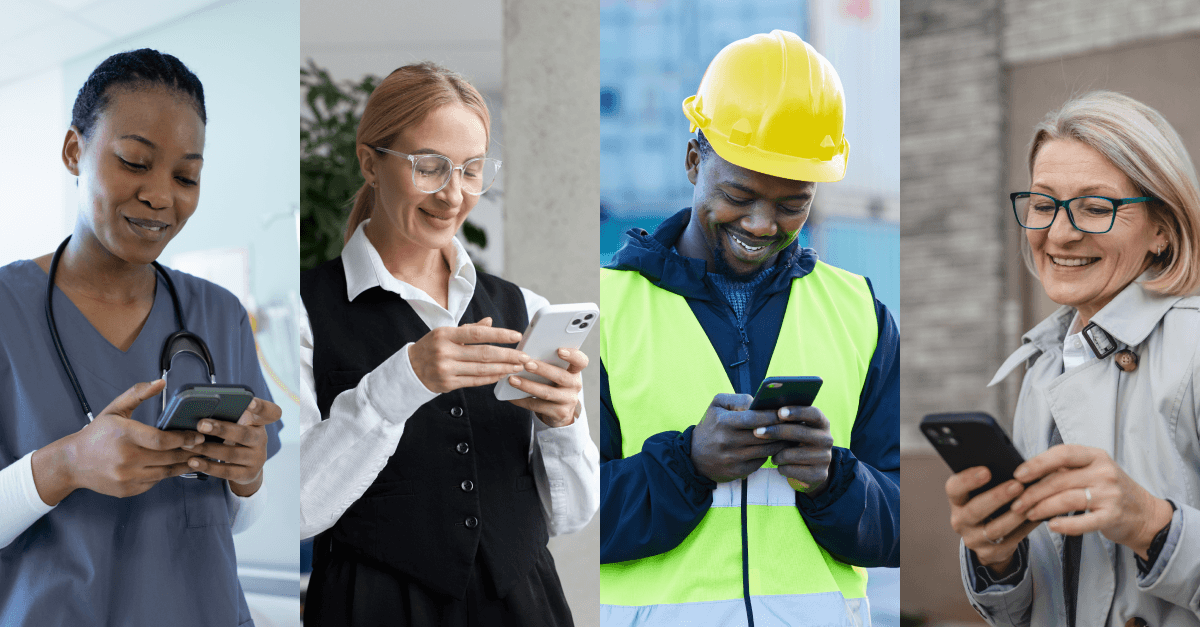
After working to change company policies around cellphone usage while on the clock, every employee suddenly had access to our diligently designed communications directly from their mobile device—the barriers to information, tools, and resources were gone, requiring only a download, a login, and a few taps of the finger.
We saw the same story play out, time and again, at each property, across every department. No longer were supervisors and managers (some with dozens of direct reports spread across multiple shifts) the sole means to convey critical messages or updates. For the first time, the company was truly connected.
The transformative power of the platform was immediate and dramatic. At MGM, we saw increased adoption and engagement rates across all departments—with some properties in the nationwide portfolio exceeding 90% adoption—most critically with those frontline teams we finally were able to reach with our messaging, many for the first time. Critical updates and important information could circulate throughout the company in ways, at speeds, and at scales we previously could only have dreamed of. That kind of connectivity is the goal and motivation of comms teams large, small, and small-and-mighty; to have a connected workforce of tens of thousands forming a network of informed employees felt like the most radical transformation I’ve ever been able to witness.
____________________________________________________________________________
Now that I’m on this side of things as a Business Value Consultant, I see just how common and widespread these problems are across organizations of every size and scale, common to my customers whether they are in hospitality, manufacturing, healthcare, utilities, or logistics. The central questions to answer are how to reach those frontline, deskless workers, especially those who have historically been hardest to reach. And once you do, how do we make them want to engage with this critical content?
When I meet with customers to help them refine a communications strategy for finding their frontline audience, we start the planning conversation by noting that to effectively engage employees on mobile, there are three must-haves:
- Establish a mobile value proposition for the platform
- Develop a content strategy that keeps them coming back
- Deploy effective promotional tactics accordingly
In this entry in the mobile adoption and engagement series, we’ll look at how to establish a Mobile Value Proposition and why it’s the crucial, foundational pillar of your mobile strategy to achieve long-term and sustainable adoption and engagement.
Mobile Value Proposition
There is one question your employees will ask, either subconsciously or consciously, when approached to engage with your platforms and channels: “why is this worth my time?” We refer to this as WIIFM (“what’s in it for me”), and it’s the fundamental question your mobile strategy needs to answer. Beyond any promotional engagement tactics, having a value proposition establishes the fundamental expectation of value and interest for the teams you are asking to engage. Without this, any promotional blitzes and surges in downloads are doomed to fail in the long-term since there will be no underlying, substantial reason for them to keep coming back to the platform after they’ve downloaded or logged in.
A well-defined mobile value proposition in turn helps:
- Employees and stakeholders quickly understand your platform’s impact
- Shape promotional messaging, content, and campaigns
- Guide which experiences and features to activate and highlight
- Increase adoption, trust, and repeat usage
At MGM, we laid out a set of three value propositions—one for all employees, one for leaders, and one for communicators:
| Audience | Value Proposition |
|---|---|
| All Employees | Access to diverse, relevant content from around the company; Personalized experience to stay informed and connected to leaders and the company; Fun, inspiring real-time news and updates |
| Leaders | Outlet to share vision and create alignment around a unified culture; Ability to connect with all employees in a new, modern way; Opportunity to showcase thought leadership and humanize leaders |
| Communicators | Ability to measure efforts, track progress, and showcase what’s going on across the organization; Reliable and streamlined channel to connect with employees |
Ultimately, your value proposition is only as strong as its supporting program strategy. Before we can promote our why, we need to build an environment that keeps them coming back.
In the next installment of this series, we’ll take a look at developing a content strategy to support your value proposition, which will be an in-depth look at content, cadences, and more, all with an eye on sustainability, repeatability, and return engagement.
____________________________________________________________________________
Firstup Business Value Consultants offer an entire catalogue’s worth of bespoke Best Practice Sessions, which provide specific recommendations, customer examples, and use cases on a wide variety of topics—including Mobile Adoption & Engagement—tailored to you and your organization’s needs. Schedule your session today.
Hear from MGM and other Firstup customers live this fall at Spotlight on Frontline.
2026 Spotlight on Frontline
Real Stories. Real Frontlines. Real Impact.
September 30 – October 1, 2026
Atlanta | The Tess, Atlanta Buckhead, Autograph Collection
Table of Contents
Related posts
Subscribe via Email
Subscribe to our blog to get insights sent directly to your inbox.
Related posts



Sign up to receive the latest news and resources from Firstup
Firstup delivers personalized communication and data insights to improve the employee experience at every moment that matters