


Table of Contents
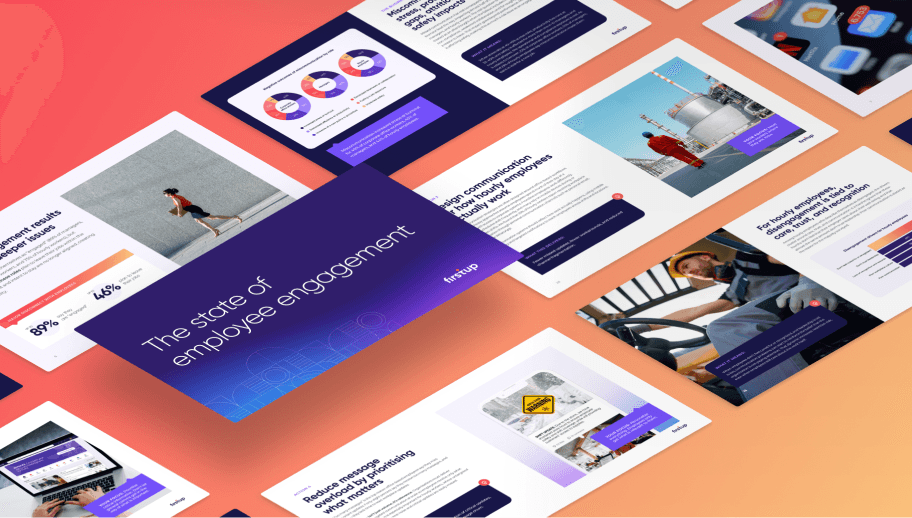
Internal communication is the function within an organization that delivers information, context, and updates to employees across channels like the employee app, intranet, email, digital signage, and Microsoft Teams. In 2026, Firstup's State of Employee Engagement Reports for North America and the UK found that up to 89% of managers, 82% of corporate office workers (76% in the UK), and 75% of hourly employees (69% in the UK) describe themselves as engaged, yet 40% to 46% across these roles plan to leave within 12 months, with communication reliability emerging as a leading indicator of retention.
Internal communication is the continuous process an organization uses to keep employees informed, connected, and aligned across verbal, written, and digital channels. It promotes a shared understanding of the company's vision, goals, values, and guidelines across departments and establishes a trusted voice so employees stay updated on the latest initiatives. Firstup's 2026 research found that 23% of employees across roles say communication breakdowns make them want to look for a new job, putting employee retention at risk.
In this post we cover what internal communication means in 2026, the trends shaping the function, and how to build a strategy that engages a dispersed workforce.
Key Insights
- Up to 89% of employees describe themselves as engaged, yet 40% to 46% plan to leave within 12 months.
- 61% to 67% of employees report missing an important policy or procedural update.
- Internal communication in 2026 uses targeted, channel-appropriate delivery to send messages that align employees with company goals.
- An effective internal communications strategy aligns with business objectives, supporting employee engagement and retention.
- Multi-channel tools, including social media, keep an engaged workforce connected across the employee app, intranet, email, digital signage, and Microsoft Teams.
- AI and analytics now support drafting, personalization, and sentiment analysis for internal communications teams.
Internal communication trends for 2026

Two main factors are impacting internal communications and reshaping the communication channels that reach employees. One is the effect of technological change, and the other is the move towards a hybrid workforce. Both have far-reaching implications and may radically alter the workplace; at the same time, they have the potential to make internal communications teams indispensable to productivity and efficiency.
Deliver a hyper-personalized employee experience at scale
Impact of technology in the workplace
The sheer amount of technology affecting workplaces around the world is truly staggering. According to the World Economic Forum's Future of Jobs Report 2025, companies surveyed plan to invest in new technologies as part of their growth strategy by 2030. The key technologies mentioned include:
- Big data analytics
- Cloud computing
- AI and machine learning
- Internet of Things and connected devices
- Encryption and cybersecurity
These tools make companies more efficient and let them compete in a digital-first world. The challenge is keeping employees engaged and aligned with organizational goals as technology changes the work itself. Platforms that leverage employee data help internal communications teams deliver targeted messages so no one is left behind.
WEF estimates that 170 million new jobs may be created and 92 million displaced by 2030, with AI, big data, robotics, and the energy transition driving most of the change.
Focus on the employee experience
The success of any company initiative depends on whether employees can (and want to) meet strategic organizational objectives. This is especially true during an accelerated digital transformation. If most employees feel disconnected from the business and don’t understand why decisions are being made, the organization’s program is likely to fail. Good internal communications creates personalized, timely employee engagement , driving better outcomes. Strong, tailored communications provide a major strategic advantage.
Reaching frontline and hourly workers
Advancements in technology have fueled the rise of freelance and gig-economy workers. Internal communicators must reach a dispersed workforce, including deskless and frontline employees who make up 80% of the global workforce. Without mobile-first tools, many cannot reliably access company communications. Critical communications about safety, shift changes, and policy updates need to land in minutes, not days. Firstup's 2026 research found that 75% of hourly workers describe themselves as engaged, but 40% plan to leave within 12 months, making channel mix and targeting central to retention.
Employee engagement and internal communication
To engage employees effectively, internal communications must reach them on the channels they actually use. Frontline workers, contract employees, and remote teams have unique concerns that drive their performance. A targeted, data-informed workforce communications program is no longer a luxury, and standard methods will not produce meaningful engagement. Communications leaders deliver targeted, relevant content across employee app, intranet, email, digital signage, and Microsoft Teams, leveraging employee data to reach workers when and where they will engage.
What is internal communication?
Internal communication is the function within an organization responsible for keeping employees connected and informed, and creating a shared understanding of company goals, values, and guidelines. It covers both top-down corporate communications from leadership and two-way communication that lets employees respond, ask questions, and surface issues to senior leaders.
Business communication is the broader category of organizational communication, covering both internal communications and external messaging shared by a company. This could take the form of an all-hands meeting, messages sent via an employee-engagement app, emails, intranet messages, digital or printed signage, or printed materials. External messaging extends to social media and advertising campaigns aimed at customers and business partners.
Internal communications is critical to business communication. Internal communicators forge the following unique, key links among the following elements:
- The employee experience
- Company-wide business goals
- Changes related to digital transformation
- Any new initiatives, executive hires, programs, or projects
Business communications align business goals and objectives with every employee. Without an internal communications program that delivers targeted and personalized messages, your business goals may fail to resonate with the workforce.

What are the four types of internal communication?
The four types of internal communication describe how information moves through an organization: vertical, horizontal, formal, and informal.
Vertical communication
Vertical communication is top-down and bottom-up communication between employees at different organizational levels, including leadership messages, manager cascades, and employee feedback flowing back up.
Horizontal communication
Horizontal communication is communication between employees at the same organizational level: team meetings, peer collaboration, and cross-department coordination.
Formal communication
Formal communication moves through official channels: company-wide emails, intranet posts, town hall meetings, leadership videos, and digital signage. These formal channels establish company policies and share company news.
Informal communication
Informal communication happens outside formal channels through Slack threads, hallway conversations, peer chats, and casual video calls. Informal channels surface concerns early and facilitate quicker discussions.
Effective internal communication strategies use all four. Relying only on formal, top-down channels produces communication barriers and a workforce that doesn't feel heard. Two-way communication across the full mix keeps employees aligned with company goals.
What is an example of internal communication?
A common example of internal communication is a company-wide town hall meeting where senior leaders share company performance, strategic priorities, and field employee questions. Town hall meetings are formal, vertical, and two-way.
Other everyday examples include:
- A push notification through the employee app alerting hourly workers to a shift change or critical policy update
- A weekly email digest sharing company news, project milestones, and team meeting summaries
- A digital signage screen in a manufacturing facility displaying safety reminders and recognition announcements
- A pulse survey gathering employee feedback on a recent change initiative
What are the 5 C's of communication?
The 5 C's of communication are the qualities that make any message effective: Clear, Concise, Concrete, Correct, and Courteous.
- Clear: the meaning and the requested action are unambiguous
- Concise: respects the reader's time and avoids filler
- Concrete: specific facts, names, and numbers replace vague claims
- Correct: the information is accurate and verified
- Courteous: the tone respects the reader and assumes good faith
Internal communicators often extend this framework with Context, Consistency, and Credibility. Together, the 5 C's reduce communication barriers and improve message reach across formal channels and informal channels.
Why internal communication matters in 2026
What makes internal communication important is that the employee experience sits at the center of every company initiative.
Employees need to feel connected to the company: its decisions, initiatives, programs, departments, and executive messages. These connections are imperative to help employees understand why executives are making decisions and implementing changes. When they understand what's driving those decisions and changes, they're more likely to be receptive and engaged.
Internal communications also supports transparency within an organization.
Firstup's 2026 research found that 61% to 67% of employees report missing an important policy update, making reliable message reach the central concern for internal communications teams. Poor internal communication leads to missed updates, declining trust, and rising attrition. Poor communication across any channel erodes the engagement employees report on surveys.
Company culture
Gallup's State of the Global Workplace Study shows only 1 in 3 employees strongly trust the leaders of their organization. Trust is built on honest communication that connects employees to the company's vision and values. Internal communications helps employees understand company culture and build connection to the company's brand. Employees who trust their leaders are more productive and more likely to advocate for their employer, supporting employee retention and strengthening the employer brand without additional marketing spend.
Building an effective internal communications strategy
We've worked with leading communicators from Dow, Extreme Networks, American Cancer Society, Love's Travel Stops, and Newell Brands, whose journeys to improve the employee experience and achieve their digital initiatives revealed important lessons and insight on internal communications initiatives.
Internal communication goals
Set goals and KPIs when you start a project. Choose the right channels and vehicles for your initiatives; that decision determines what can and can't be measured. Today's internal communications pros don't launch new programs without first mapping goals and a strategy to measure success.
To measure internal communications success, only 29% of organizations effectively track the impact of their communication efforts, yet 40% of leaders are confident they are using the right metrics.
Firstup has many customer stories showing how to reach the right groups of employees with the right content, at the right time and place. Your internal communication strategy should include an internal communication plan to measure success, prove value to the executive team, and inform future campaigns.
Internal communication strategies
The best internal communications leaders continually reassess their strategies as company goals evolve and new initiatives emerge. That means evaluating top-down corporate communications alongside two-way communication and horizontal communication across teams. Regular updates to your internal communications keep employees aligned with the organization's goals and connected to the company's culture.
Choosing the right tools and platform
Internal comms teams are often stretched thin, with as few as one internal communicator for every 10,000 employees. Internal comms pros need tools that streamline processes and provide insights into communication performance, freeing more time for strategy.
Internal communications teams need a combination of mobile apps, software platforms, and email tools:
- Mobile apps. Many organizations, especially those with deskless or frontline employees, use internal communication apps to keep employees engaged. A DIY app without a proper workforce communications platform on the backend leads to inefficiencies.
- Intranet software. Companies have relied on intranets to reach employees for over a decade, but most are clunky, out-of-date, or inaccessible to employees who don't work at desks.
- Workforce communications platform. The best communications teams use workforce communications platforms because single-capability tools don't work alone. An integrated system reaches employees on their preferred communication channels, connects strategy to content, and measures success, which justifies ROI and gets executive buy-in. Modern platforms increasingly apply AI to personalize delivery at scale: McKinsey reports that gen AI now lets companies deliver personalized employee experiences and free managers' time for more individualized, higher-value interactions.
- Email. Email remains a standard-bearer of workplace communication, but managing it can be a hassle. A platform like Firstup lets you customize designs, maintain targeted distribution lists, automate campaigns, and optimize delivery times. Email metrics then feed back into your strategy.
Internal communications myths
We discovered:
- 29% of employees lack clear, honest, or consistent communication from their leaders,
- 43% of corporate workers and 37% of managers spend three or more hours a week searching for the information they need, and
- some employees did not even know where to find company information.
Gaps like these explain why misconceptions about internal communications persist, a point explored in 5 Internal Communications Myths Debunked.
How to become an internal communicator
There is no one way to become an internal communicator. Many enter the field from backgrounds in journalism or public relations, where they develop the writing skills necessary to craft messages for a variety of channels, including newsletters, websites, and more.
Strong writing matters, but listening matters as much. Being a successful internal communicator requires good listening to understand employees' viewpoints. Creativity is equally important, allowing communicators to craft messages that resonate with diverse audiences. Some internal communicators begin their careers in external communications before transitioning into internal roles.
Today's internal communications landscape
Internal communications has taken on a greater role as workplaces evolve. Platforms like Firstup help communicators reach every worker by integrating multiple channels into a unified strategy that engages employees across the organization.
Deliver a hyper-personalized employee experience at scale
FAQS
Table of Contents
Related posts
- 8 key components of a successful enterprise communication strategy
- 25 employee newsletter ideas to engage and improve your workplace
- Engaged but about to leave: What workers in North America and the UK are really telling us
- Choosing the Best Internal Communication Tools for a More Connected, Engaged Workplace
Subscribe via Email
Subscribe to our blog to get insights sent directly to your inbox.
Related posts



Sign up to receive the latest news and resources from Firstup
Firstup delivers personalized communication and data insights to improve the employee experience at every moment that matters