

Table of Contents
A hybrid workforce is a flexible work model where employees split their time between working remotely and working on-site, choosing the location that best fits the task or day. As of 2026, 53% of remote-capable U.S. employees work in a hybrid arrangement, with most spending two to three days in office each week, making hybrid the default operating model for knowledge-based industries.
Key Insights
- Hybrid is the default for knowledge workers in 2026. According to Gallup, 53% of remote-capable U.S. employees now work in a hybrid arrangement.
- The "3-2" model dominates. Three days in the office and two days remote has emerged as the most common schedule for hybrid teams.
- Hybrid boosts retention without hurting performance. A Stanford-led study in Nature found hybrid schedules cut quit rates by 33% with no measurable drop in productivity or promotions.
- Flexibility is now non-negotiable for talent. Most remote-capable workers will look elsewhere if forced back to the office full-time.
- Communication is the make-or-break variable. Hybrid teams need omnichannel reach across mobile, intranet, email, and digital signage to keep frontline, deskless, and in-office employees aligned.
Hybrid work has settled into its long-term shape. What started as a pandemic-era experiment is now the default operating model for many knowledge-based industries, with 53% of remote-capable U.S. employees working in a hybrid arrangement and just 20% back on-site full time, according to Gallup. The “return to office” headlines keep coming, but the distribution has stopped moving.
Employees have made their preference clear. Gallup finds nine in ten remote-capable workers want some form of flexibility, and research from Stanford economist Nick Bloom shows hybrid schedules cut quit rates by 33% with no measurable drop in performance. For most companies, hybrid is no longer a perk to defend. It’s the model the workforce expects, and the operational question is how to run it well across frontline, deskless, and desk-based employees.
What is a hybrid workforce?
A hybrid workforce is a flexible work model where employees split their time between working remotely and working on-site, with the option to choose their preferred work environment based on the task, the day, or their role. Some employees work fully remote, some fully on-site, and most somewhere in between.
Before 2020, hybrid arrangements existed but were rare. By 2026, the hybrid workplace has been institutionally codified: a majority of organizations now have permanent hybrid policies, and the conversation has shifted from whether to allow flexible work to how to run it well across distributed teams.
Types of hybrid work models
Not every hybrid work model looks the same. Some companies set fixed in-office days, some let teams decide, and some build schedules around job function. The right hybrid workforce model depends on the work, and the hybrid workplace model you choose will shape culture, hiring, and real estate decisions for years.
The most common pattern in 2026 is the “3-2” schedule: three days in the office, two days remote. Gallup's data shows hybrid workers now spend roughly 2.3 days a week on-site.
| Model | How it works | Best for |
|---|---|---|
| Fixed Hybrid | Set in-office days for all employees (e.g., Tuesday, Wednesday, Thursday). | Teams that need predictable in-person collaboration and shared meeting days. |
| Flexible Hybrid | Employees choose their own in-office days within a minimum requirement. | Mature teams with strong async habits and high trust. |
| Remote-first | Remote is the default; the office is optional space for occasional gatherings. | Companies hiring globally or operating across many time zones. |
| Role-based | Schedule is determined by job function. Sales may be remote-heavy; product may be in-office heavy. | Organizations with sharply different role types. |
| Rotational | Teams rotate in and out of the office in shifts to keep occupancy balanced. | Companies with reduced office footprints or hot-desk environments. |
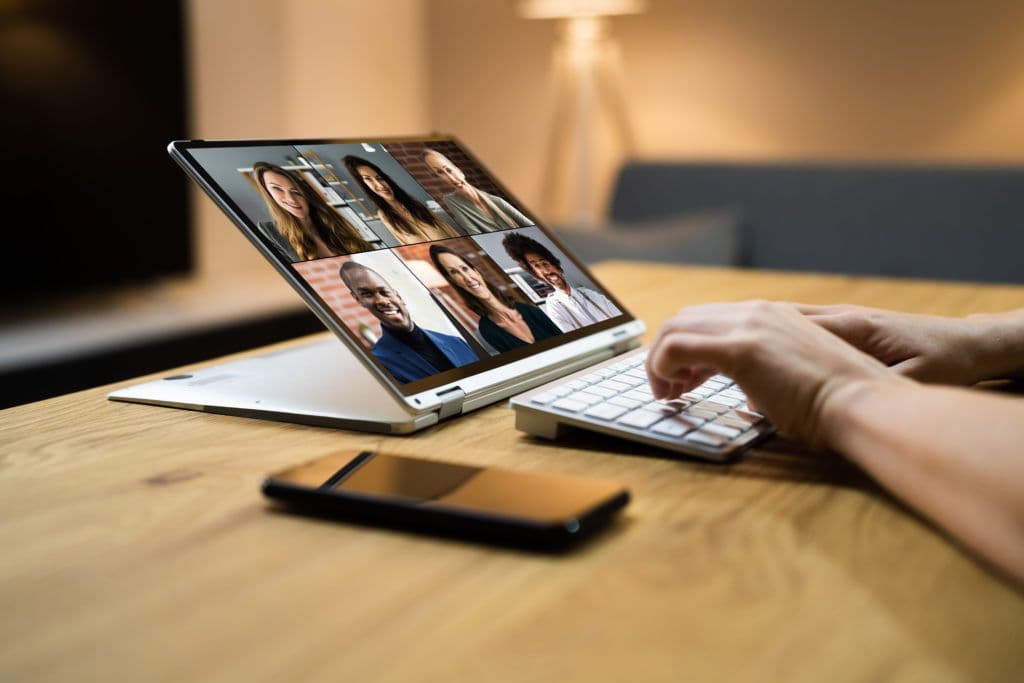
McKinsey's analysis of 20% to 25% of workforces in advanced economies being able to work from home three to five days a week without a loss of productivity anchors the upper bound of how flexible most knowledge organizations can go.
Advantages of a hybrid workforce
A successful hybrid workplace gives employees the best of both worlds: focused work from home and in-person collaboration in the office. With a hybrid workforce, hybrid employees can take advantage of either as they need to. Beyond the day-to-day flexibility, here are the advantages worth calling out.
Better work-life balance
Flexibility in deciding where and when to work offers employees a much better work life balance. They can integrate work with their personal lives, meet family needs, handle appointments, and run errands, rather than sitting at a desk for eight or nine hours.
That freedom shows up in the data. Gallup's 2026 research found that 76% of hybrid workers cite improved work life balance as one of the greatest benefits of the model.
Remote workers can live anywhere
A hybrid workforce model lets employees keep their job while moving closer to family or to a more affordable city. Workers can also give themselves an effective raise by relocating somewhere with lower housing costs, and digital nomads gain a base to work from while they travel.
Increased possibilities for continuous learning
Flextime means remote workers may be able to take advantage of continuous learning opportunities that were previously only available during work hours. Whether it’s studying new skills, attending conferences, or mentoring interns, this environment gives employees the time they need to keep learning while still hitting their work goals.
Increased productivity
Letting people start work at their most productive time is one of the practical wins of hybrid. Hours your hybrid teams work are spread throughout the day, so there’s usually someone around getting things done.
The research backs this up. A Stanford-led study of more than 1,600 workers, published in Nature, found that two days a week of working from home had zero negative effect on productivity, performance, or promotion rates compared to a fully in-office baseline. Add in no commute, and employees “arrive” at work without the stress of traffic.
Better access to workforce talent
Gone are the days of scouting for talent only within a certain radius of your headquarters. A hybrid workplace model lets HR managers and companies accept applications from workers around the globe, opening access to a talent pool no single location could deliver. The bonus: your team interacts with people from all over the world, which adds to company culture.
Reduced expenses for both employee and employer
Hybrid and remote employees spend less on work clothes, commuting, and eating out, which adds up to real monthly savings.
For employers, cost savings come from not having to rent, maintain, and pay utilities on the same amount of office space. A smaller office, or several smaller offices closer to where employees live, can be more cost-effective than a single big headquarters. Many large organizations have already reduced their office footprint as part of this shift.
Environmental benefits
Climate change is an issue hybrid workforces can have a real impact on. Fewer people commuting, and less business travel, means lower emissions, and every small change helps.
Disadvantages of a hybrid workforce
Not every employee thrives in a hybrid workplace, and not every company is ready to offer one. The model brings real trade-offs that organizations need to plan for. Done badly, a hybrid model can split a team between on site and remote in ways that hurt culture, and on site managers can unintentionally favor whoever is in the room:
- Employee isolation. Working alone for most of the week can feel lonely, and remote employees can feel out of the loop without a strong communication platform.
- Equity and visibility gaps. Remote workers can end up with less access to information and fewer promotions than their in-office counterparts unless HR actively designs around it.
- Burnout and time management. Some employees struggle to stay on track without office structure; others struggle to switch off, answering messages at all hours.
- Security risks. IT departments and security teams have to protect data and devices across many endpoints and personal networks.
- Collaboration friction. In person collaboration is harder from a distance; casual hallway problem-solving disappears and tools can’t always replace it.
- Trust and management. Some business leaders default to surveillance software, which damages culture. The real fix is hiring the right people for the right roles.
Best practices for a hybrid workforce model
Running a successful hybrid team is mostly about being intentional. Communication, tools, performance tracking, and feedback all need to be deliberately designed for distance. The practices below separate a hybrid work model that works from one that quietly falls apart, whether your remote work setup splits the week between home and the office or follows a fully flexible hybrid arrangement.
Hire from a wider talent pool
Location-specific job ads aren’t necessary anymore. HR leaders can search far and wide for top talent, find candidates who actually fit the role, and recruit from a much wider talent pool than ever before. Diversity in hires comes with this paradigm shift.
Rebuild onboarding for distributed teams
A single shared handbook doesn’t cut it anymore. HR needs a one-stop, mobile-ready platform where employees can learn about the company, access the software and materials they need, sign up for benefits, and know who to contact for what. Build the systems for a remote-first workforce and they’ll work for any hybrid workforce too.
Communicate clearly and often
Good communication tools are what hold a hybrid workforce together. Internal communication teams have to reach hybrid teams, garner employee feedback, and make sure information actually reaches everyone, on-site or off.
Platforms like Firstup help reach every employee, everywhere. Firstup delivers personalized employee communications across the Firstup employee app, intranet, email, and digital signage from a single platform, with intelligent targeting by role, location, and behavior. As we like to say around here: when your comms strategy succeeds, your employees succeed.
Track performance, not hours
Managers need to rethink the old “how many hours and when” model and switch to goal setting, milestones, and deadlines. This is already standard at high-growth companies, where outcomes over hours is the default for hybrid teams. What matters most is that the work gets done well, whether it happens in office on a Tuesday or at a kitchen table on a Friday.
Invest in the right tools and tech stack
Adopting collaboration tools that work for every employee is key to a successful hybrid workforce. A modern hybrid tech stack typically includes a shared productivity suite (Google Workspace or Microsoft 365), real-time messaging (Slack or Microsoft Teams), video conferencing for meetings (Zoom or Teams), and a mobile-ready workforce communication platform that reaches every employee, including frontline and deskless workers. The right tools make collaboration fast, reduce employee frustration, and keep work moving across time zones, whether teams are on site or remote.
Rethink career development for hybrid teams
Hybrid changes how career development happens because the team isn’t in a single office, being seen and attending the same meetings. To keep your best talent, HR has to adapt how development is delivered.
- Set up individual development plans with clear goals and steps.
- Schedule regular one-on-one check-ins with all employees, on-site or remote.
- Offer stipends for continued learning.
- Increase upskilling and reskilling opportunities.
- Post all job listings where every employee can see them.
- Improve workforce communication so remote employees stay as informed as in-office ones.
Foster connection and culture
Connection doesn’t happen on its own in a hybrid workforce. It has to be designed. Intentional rituals, things like virtual coffee chats, team games, peer recognition moments, and structured in person meetings on overlap days, help prevent isolation and keep team cohesion intact across a hybrid workplace model. The goal is to make sure remote employees feel part of the team, that on site employees don’t form a separate in-group, and that a thriving company culture carries across locations.
Gather regular employee feedback
No hybrid model gets it right on the first try. Regular employee feedback through pulse surveys, manager check-ins, and open comment channels is how you find out what’s working. Listening for diverse employee needs matters more in hybrid because the experience varies by role, location, and personal circumstance. Acting on what you hear is how the model improves over time.
Technology and the hybrid workforce
Hybrid work depends on its tech stack. The right tools turn a distributed group of employees working from different places into one functioning team. The wrong ones leave half the workforce out of the loop.
Communication and collaboration tools
The baseline is a connected stack: real-time messaging, video conferencing, document collaboration, project tracking, and collaboration tools that reach every employee, including frontline and deskless workers without corporate email. Without that layer, your remote workforce and on site teams hear different things, and a hybrid model splits along the seam.
Artificial intelligence and meeting productivity
Most hybrid meetings in 2026 use artificial intelligence for real-time transcription and summarization, freeing up time once spent on note-taking and recap emails. Used well, AI is a coordination layer, not a headline feature.
Security and IT considerations
Hybrid work expands the attack surface. Endpoint devices, personal networks, and unmanaged apps create real risk, and HR teams, IT, and security have to work together on device management, identity and access controls, and clear employee education.
Conclusion
The hybrid workforce is the long-term operating model for most knowledge-based organizations, and fully remote work will keep its share of the market alongside it. The benefits of a well-run hybrid workplace, flexibility, retention, access to talent, improved work life balance, and measurable productivity gains, outweigh the trade-offs when the model is run well. Any hybrid workplace model you choose should be designed around your people, not against them.
What separates hybrid that works from hybrid that doesn’t is communication. The Firstup platform helps leaders and communicators reach every employee with personalized, targeted messages across the Firstup employee app, intranet, email, and digital signage, from the front office to the front line. Right message, right moment, right employee, measured against real business outcomes.
Watch a demo to see Firstup in action
FAQs
Table of Contents
Related posts
Subscribe via Email
Subscribe to our blog to get insights sent directly to your inbox.
Related posts





Sign up to receive the latest news and resources from Firstup
Firstup delivers personalized communication and data insights to improve the employee experience at every moment that matters